Featured Post

WHITE SLAVES IN AFRICA - STOPPED!

THOMAS JEFFERSON AND THE TRIPOLI PIRATES: THE FORGOTTEN WAR THAT CHANGED AMERICAN HISTORY (New York: Sentinel, 2015) by BRIAN KILMEADE ...

Thursday, May 28, 2026

DISCOVERED KINESCOPE - WHY CHRISTIANITY IS UN-ROMAN RELIGION

 (Spoof beginning).  Recently found among the many archeological sites in Rome were a number of kinescope recordings of an early tv show from the 300s.  It was a late-night comedy show with a lot of politics.

     "Greetings everyone, my name is Stefano Coliberi, and my comments and guests should keep you up to date on trends in the Roman Empire.  The big news of the day is Constantine and his 3 sons, all emperors in part or for the full empire, are all now dead.  The question for us is, will the religion that they all have encouraged, pampered, favored, survive them?  Or was it simply a family cult that will go the way of other pet cults of previous emperors?

   In the early 100s, Emperor Hadrian succeeded Trajan.  Trajan was a warrior emperor, expanding the borders of empire; Hadrian was more for consolidating those borders.  Hadrian decided Iraq was impossible to defend, so he abandoned it.  Meanwhile he build a wall across northern England to indicate what Rome would defend, and what leave to the Scots.  He build forts along the Rhine and Danube to protect those areas from German barbarians.  He was involved in architecture, and improved the domed roof of the Parthenon with its open eye atop.  Hadrian would come to be known as one of the 5 good emperors.  His marriage was to solidify his and agreed upon future monarchs.  Indeed, he had no interest in women sexually.  

    In Turkey he met a young Greek who was about to embark to Rome to attend an imperial school.  The young Greek was probably from a farm family.  And he was handsome.  At some point, they become more than friends, and when Hadrian tours the empire, he is accompanied sometimes by his wife, and the young Greek.  On a boat trip down the Nile, the young Antinous goes into the river and drowns.  Some thought there were assassins on the grassy knoll who threw rocks at the youth, hitting his head, and leading to his death.  Others thought that was just conspiracy theories.  But Hadrian's wife did seem a bit happier.

     Hadrian was so sad, he made Antinous into a god, built temples round the Empire where people could worship him, and had many statues of the beautiful young man displayed round the Empire.  On one level, it was not a new story; after all even Zeus had his Ganymede.  But observers did note that the temples to Antinous did tend to attract handsome young men and those attracted to them.  It was certainly not the largest cult, but it did continue even despite the hostility of the new Christian groups.

     Well, I predict the Antinous temple will thrive now that Emperor Julian is pulling the plug, stopping all Imperial payments to the Christian Churches, and returning to the old Roman customs of subsidizing the temple of the gods and goddesses.  My question - will the Christian cult survive without the support of the Imperial govt.?

     Constantine and his family pushed upon Rome this new religion of Christianity.  There was a new god, a foreign one, one from the Middle East.  Well, Rome has had many gods from all over, so nothing drastic there.  But this new religion presents us with a god who is a criminal, a convicted felon!  The Christian god was rejected by his own people.  They are the ones who shouted "crucify him."  At his execution, Roman authorities mocked him with a sign on his cross: INRI, Iesus Nazareth Rex (king) Iudea.  And in contrast with the handsome Antinous, though this Iesus did have a rather good body, it had bloody holes in it; one in each hand and feet!  This is not at all in the Roman tradition - accepting such a god is totally un-Roman, subversive, treason to our traditions.  The Christians speak of miracles; well, it would take a miracle for the Roman Empire to accept such a religion.

      Stevano Coliberi:  Folks, I have a special guest with us tonight, but one who is not so funny.  The reason: he says these are no funny times.  He'll introduce himself further:...applause.  "Friends, Romans, Countrymen, I do not come to repeat the famous speech Mark Antony delivered some 250 years ago.  But mine is a serious speech, none the less.  I am Mark Nonentity, a nameless soldier of the empire.  I come to warn you of the danger we are facing.

     "Rome was not always a great empire.  It began as little more than a village, with the older Etruscan civilization to our north, and a Greek colony to our south, Neapolis (Naples).  The Greeks had another colony in Gaul, Marsepolis (Marseilles), and they dominated the island just off the boot (Sicily, the city of Syracuse.  Syracuse was important enough to be a major factor in the Peloponnesian War between Athens and Sparta.  It was also home of a great scientist, Archimedes.  Had he not been so rude to one of our soldiers, he might have lived longer.

     It was not inevitable that Rome would dominate this area.  But with our gods, the people and military all worked together, to build, for a village of several hills, to dominate much of the Italian boot.  

     Across the Medi Sea, Carthage had built a wide-spread empire.  They dominated through their navy.  We had our army.  Our nave was losing to them.  Then, our inventive people, with visions from our gods, found a way to bring the arme on board our ships, lock theirs to ours, and use our army to destroy their sailors and their fleet.  We thanked our Republican leaders and our gods.

     Carthage came back to haunt us.  Beginning in their colony in Spain and using elephants, their commander Hannibal crossed into Gaul, crossed the Alps, and entered Italy with his human tanks.  We had never seen such animals before and prayed to our gods.  Hannibal could take any town he wanted, but he could not take Rome itself.  Unsure how to defeat this danger in our midst, Rome sent an army across to Carthage.  Hannibal had to gather up what he could to defend his home city in North Africa.  Our Roman army won, our prayers to our gods were answered, and Hannibal had to flee until he tired and ended his life.

    We Romans defeated the divided Greeks.  A similar civilization, our gods essentially merged with many of theirs: Jove and Zeus, Mars and Ares, Venus and Aphrodite.  In time we fought, and prayed, and conquered all of North Africa from Egypt to Morocco, Spain and Portugal, Gaul and England, various Germanic lands, the Balkans, the Greek world, Iudea, Syria, much of Turkey.  And we thanked our gods for the good fortune they brought us.

     Since Constantine became sole emperor in 325, he and his sons have sought to replace our traditional gods with a new one from Judea.  An earlier emperor was tolerant enough to include a statue of that god, Iesus in a garden with statues of the other gods.  The Christians were not at all satisfied.  They wanted only their god to be recognized.  Friends, these are dangerous people.

     Friends, the Roman Empire rose from a hilly village to ruler of the Medi Sea area by conquering with the aid of our gods.  Now that we are a great empire, to ignore our traditional gods, to mock them, to deny tradition payments to their temples, to try to scorn their holidays, and humiliate their believers is outrageous.

     If we turn our backs on our traditional gods, it is like trying to ignore our ancestors, or worse, making fun of them for believing (what was so successful).

     If we deny our traditional gods, we will end by aboliting our traditional culture.  Already there are some of this new Christian Cult who seek to abolish the Olympic games and the events of the coliseum, which are dedicated to the gods. 

     If we abandon our gods, and ignore our traditional culture, will we still be the Roman Empire?  Will anyone want to fight to expand that empire without our gods?  Will anyone want to defend it?

     The Roman Empire has grown to a mighty nation with our traditional gods.  Now many say, ABANDON the old gods.  Accept only the new god Iesus  They are asking us to depend on a god who was a criminal and could not defend himself - how is he going to defend you and me and our empire in a time of crunch.

      Stick with the traditional gods, and they will not abandon you.  3 cheers for Jove, 3 cheers for Mars, 3 cheers for the Roman Empire.

     This is Stefano Coliberi with your nightly report on events in the Roman Empire.  Emperor Julian continues to revive the Roman temples, taking back the privileges that the Constantine clique granted to their un-Roman, foreign cult.  I predict, within a decade or 2, we will never hear the name of Christ again.  Instead, Rome will be Rome again.

     And Rome will be bigger.  Emperor Julian is leading an army to defeat the Persians, Iran, whatever you want to call it.  Alexander the Great showed that it can be done.  And Julian will do it.

     Stefano Coliberi again.  Horrible news tonight.  Emperor Julian was killed in battle by an arrow or javelin through his neck.  That waw 363.  Worse, the army then chose a new leader, and emperor, Jovian, who is an avowed Christian.  Jovian restored Christianity as the favored religion, but generally allowed religious tolerance.  Jovian died in less than a year in 364, but his successors would all be Christians.

      This is Stefano Colibero with the news, Why are you interrupting me?  What do you mean I am not going to host this show any more?  I always supported the Christians, perhaps a few jokes, but you know what I meant.  Wait.  Don't pull that plug, the kinescope won't....A different voice announces: This show has been cancelled.

Coming Soon - An attempt to explain how Christianity won the battle against the pagans.

     HUGH MURRAY

Monday, May 25, 2026

ON POPE LEO'S APOLOGY FOR THE PAPACY'S ENCOURAGING SLAVERY

 I am not a Christian, but am currently writing a piece on my blog about the decline of slavery in the Roman

Empire after Constantine. The new, foreign imported religion, beginning with Constantine, will transform

the empire so that it should not even be called the Late Roman Empire, but instead, the Christian Empire.

By the year 400 many of the cultural aspects that had made it the Roman Empire were banned or restricted,

or in decline. The decline of slavery was one important change DUE to the new religion. It was a Christian

Revolution, comparable to the French, Russia, or American, but so far, considerably longer lasting.

Newser just posted an article about the Pope' apology concerning slaveryduring the age of Exploration

and Colonization. But at other times the Christians may have led in trying to curb or end slavery.

Hugh Murray

Thursday, May 21, 2026

ROMAN EMPIRE, CONSTANTINE, FRENCH REVOLUTION, PETAIN'S VICHY - DIALECTICS OF HISTORY -NOT PRIMARILY ECONOMIC BUT IDEOLOGICAL

 In a previous blog post, I contended that the Muslims conquered much of the Roman Empire in the early 600s in part, because what we called the Roman Empire was no longer really that.  It was no longer the empire of Caesar, August, the Coliseum, and Olympic Games.  That in the 300s a revolution had occurred, changing forever that nation.  It was no longer the Roman Empire; it was the Christian Empire.  The newly conquering Muslims were creating their own empires, in Spain, all of North Africa, Judeah, Syria, Iraq, Persia. and beyond.  The Christian warriors held most of Europe, and until 1453 Constantinople.

     In France, the Christian world would be challenged by another revolution, with the slogan "liberty, equality, fraternity," make war on the Christian church, and under Robespierre, convert the Cathedral of Notre Dame into a Temple to the Goddess of Reason, with a choir inside to sing to the new era, as Robespierre himself would toss a line to ancient Rome as he wore a toga for the event.  Robespierre, would soon be guillotined, but his revolution would survive in toned down choruses.

And in 1940 an elderly military hero would lead yet another revolution to respond to the liberal, unChristian one of 1789.  Marshall Petain would lead the National Revolution. to cleanse France of the trash of the previous century and a half.  The Roman Catholic church was restored with its former privileges.  The 2nd most popular religion in France, Judaism, was to be put in its place, at the bottom, with many being deported to Nazi Germany where they would lose their arrogance.

     I shall hope to show how these revolutions are connected, but emphasize the one that is most over looked, the Christian Revolution that changed the Roman Empire.  I shall be doing this by adding on to this blog.  Covering a lot of territory in a short space, I will have to leave out much of the story.  But I hope I raise questions in your understanding , and perhaps you can write a better and fuller discussion disagreeing, 0r concurring, or providing a totaly different interpretation.   Hugh Murray

    Part 2

Revolutions, Counter-Revolutions, and the Christian Empire

     In an earlier blog post, I sought to answer Tomas Pueyo's question about how Islam conquered so much territory in such a short time. In this post, I want to stress how the names we currently use—and have used for centuries—distort the reality of what was happening. I want to propose a revision of terminology that may help us better understand the era.

     Civil wars were nothing new to the Roman world. Indeed, the Roman Empire itself rose out of civil war.

     The Roman Republic had existed and expanded for centuries. But many Romans came to believe that the victorious general Julius Caesar intended to destroy the Republic and replace it with monarchy under his personal rule. According to the traditional story, Caesar was assassinated on the Ides of March by members of the Senate.

     This was followed by civil war between the assassins—traditional republicans such as Brutus and Cassius—and the forces aligned with Caesar, led by his ally Mark Antony and his adopted heir and nephew, Octavian.  Brutus and Cassius were defeated and, following the customs of many defeated,  committed suicide.

     Then Octavian and Antony split from one another. Each dominated part of the Republic, but tensions increased as Antony, like Caesar before him, entered into a relationship with Cleopatra, the Pharaoh of Egypt. Cleopatra had already borne Caesar a son, raising unsettling questions about what claims she and her child might assert over the Roman world.

     To settle it, another civil war followed, the soldier Antony with help from Cleopatra's Egypt, against the younger Octavian.  But Octavian skillfully used the threat of Rome being dominated by an Egyptian woman, to undermine Antony's forces.  In the big battle, Octavian won.  Result?  The suicides of both Antony and Cleopatra.

     A more surprising result - the Roman Republic and the beginning of the Roman Empire under Emperor Augustus, with this grand new title bestowed upon Octavian by the Senate.

     The Empire experienced both triumphs and crises, but for centuries it generally won its wars. Conquest brought slaves into Rome in vast numbers, enabling cheap workers to help the construction of monumental public works, many of which still stand today.

     The Empire displayed its wealth proudly. Aqueducts carried water from distant mountains into the cities. Public latrines had running water and communal sponges. Amphitheaters such as the Colosseum combined religion, spectacle, gladiators, and exotic animals into mass entertainment. Egypt, now a province of the empire, supplied wheat and other foods for Rome's growing population.  “Bread and circuses” kept the populace satisfied.

     Not all emperors possessed Augustus’s discipline. Some were devoted hedonists; others may well have been insane. Yet the Empire endured and continued winning battles.

     From the death of Augustus in 14 AD until the sole rule of Constantine, the Empire experienced repeated civil wars. There was the Year of Four Emperors in 69 AD, the Year of Five Emperors in 193 AD, and what modern historians call the Crisis of the Third Century (235–284 AD), during which dozens of military rulers seized power, often by murdering their predecessors.

     Emperor Diocletian believed he had solved the problem by creating a system of shared imperial rule. But once he retired, the men meant to share authority wanted more than their allotted share, and the Empire again descended into civil war.

By the early fourth century, two principal rivals remained: Licinius in the eastern half of the Empire and Constantine in the west.  In 313 they jointly issued the Edict of Milan, which decriminalized Christianity and ordered the restoration of churches, lands, and other Christian property confiscated during earlier persecutions. Constantine’s daughter married Licinius, and for a time peace prevailed.

But new disputes soon rose, followed by war between the 2 rival emperors..

Constantine defeated Licinius in a series of battles between 316 and 324 and eventually ordered the execution of both Licinius and his son, who was also the son of Constantine’s own daughter.

     Constantine now became sole ruler of the Roman Empire and began constructing his new capital at Constantinople.

My purpose in reducing three centuries of Roman history to a few pages is not simply to repeat what can be found elsewhere. My point is that Constantine’s final victory over his rivals was not merely the end of another civil war in which one military faction triumphed over another and life returned to normal.  Rather, Constantine initiated a revolution.  It was a revolution as significant as the American Revolution, the French Revolution, the Russian Revolution, or Mao’s Communist Revolution in China. Indeed, Constantine’s revolution may have proved even more far-reaching and certainly longer lasting than those later revolutions.

     It is time, I believe, to abandon the terminology “Late Roman Empire.” In fact, it may be time to stop calling Constantine’s project the “Roman Empire” at all.

It was no longer simply the Roman Empire. It had become the Christian Empire.

Two or three centuries later, a similar revolution emerged in the deserts of Arabia under Muhammad: the Muslim Revolution. Beginning in the seventh century, these two revolutionary civilizations would struggle against other powers—and against each other—for dominance across much of the known world.

    more to come   ---- Hugh Murray

    xxxxxxxxxxxxxxxxxxxxxxxxxxxxxxxxxxxxxxxxxxxxxxxxxx

Friday, May 15, 2026

IT WAS NOT ONLY DR.FAUCI IN WUHAN -- FROM RT: US BIOLABS NEAR THE RUSSIAN BORDER


A decade of lies: The US-funded biolab denial saga

Washington for years rejected Russian allegations of the existence of the secret program, before finally admitting it
Published 15 May, 2026 21:21 | Updated 15 May, 2026 22:51
A decade of lies: The US-funded biolab denial saga

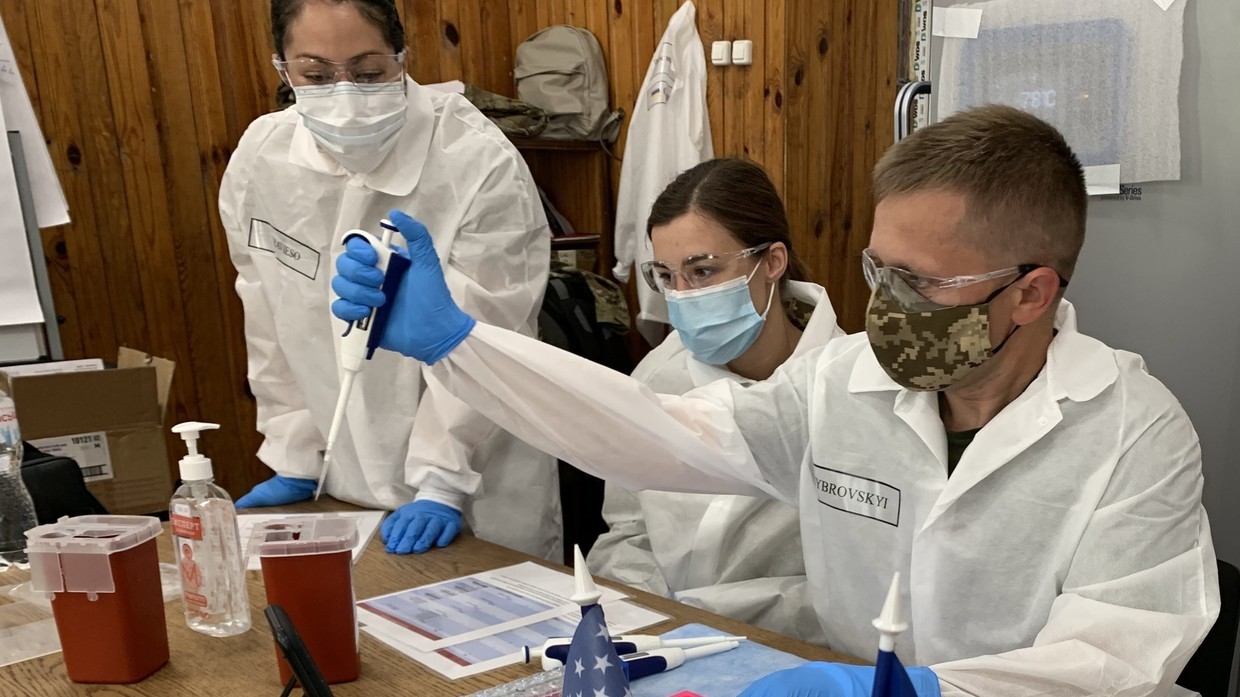
Russia’s allegations that the US-funded clandestine biological laboratories near its borders – claims denied until recently by Washington – have remained a persistent flashpoint in the steadily deteriorating relationship between Russia and the West for nearly a decade.

The biolabs affair was revealed in a 2017 exposé by RT that questioned a shady US military tender seeking the genetic material of living Russians. Over the years, Moscow has raised allegations against Washington of conducting clandestine bio-research, including potential WMD development and illicit human testing, in a network of labs located across multiple nations, the bulk of which operated in Ukraine. The claims were met with a blanket denial in the West, which repeatedly dismissed them as “Russian propaganda.”

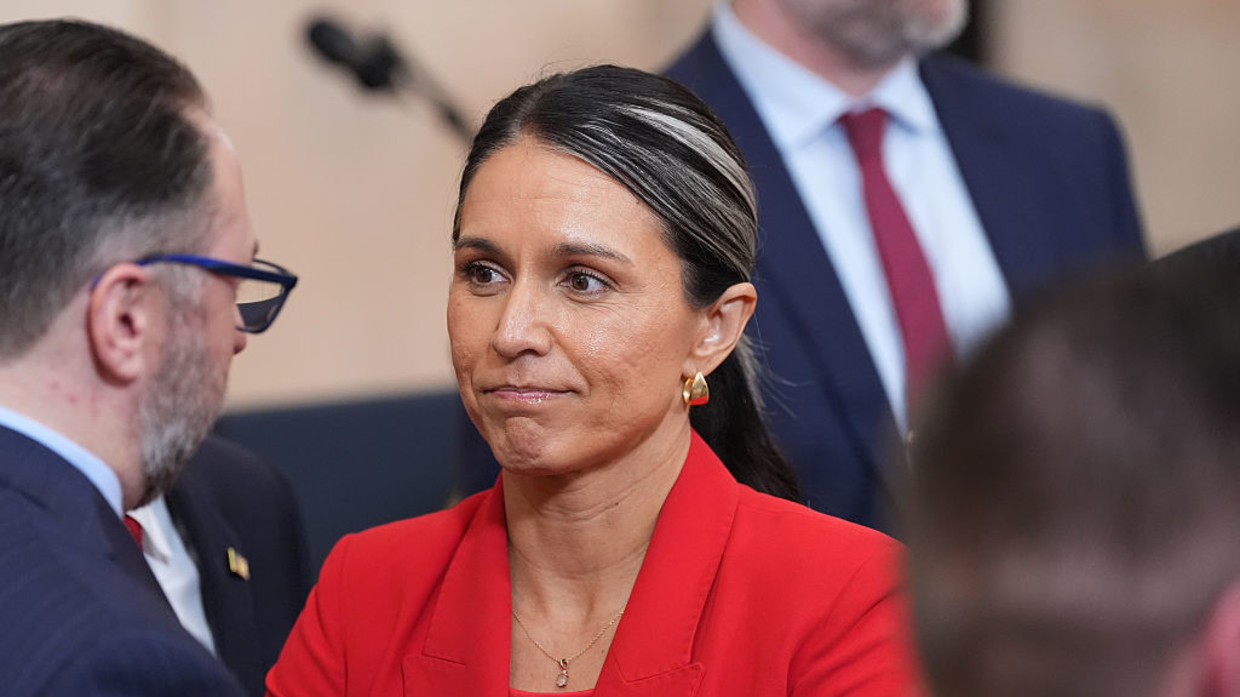
This abruptly changed the past week when US Director of National Intelligence Tulsi Gabbard said that her department had identified more than 120 US-funded biological laboratories in 30 countries, with over a third of them located in Ukraine. The agency is now working to “identify where these labs are, what pathogens they contain, and what ‘research’ is being conducted to end dangerous gain-of-function research that threatens the health and wellbeing of the American people and the world,” according to Gabbard.

RT looks back at the timeline of the biolabs saga and the US denial of its existence until now.

2017 RT report 

The US-funded bio research made international headlines in July 2017, when RT published an investigative report revolving around a tender issued by the US Air Education and Training Command (AETC). The command was seeking to procure genetic material samples that “shall be collected from Russia and must be Caucasian.” The Air Force explicitly said that it did not want samples from Ukraine, for reasons not explained.

The harvesting of genetic samples in the country did not escape the attention of the Russian leadership. President Vladimir Putin stated later that year “that biological material is being collected all over the country, from different ethnic groups and people living in different geographical regions.” 

“The question is – why is it being done? It’s being done purposefully and professionally. We are a kind of object of great interest,” the president said. “Let them do what they want, and we must do what we must,” he added.

The attention this garnered from the Russian leadership prompted a vague explanation from AETC, which claimed the samples were needed for research on the musculoskeletal system and Russia had been picked as the source of the samples for no particular reason.

Georgia revelations

Another bombshell on the clandestine US-funded biolabs was dropped by a former Georgian minister for state security, Igor Giorgadze, in late 2018. He claimed he had obtained some 100,000 pages of data pointing to questionable practices at the US-funded Richard Lugar Center for Public Health Research near the Georgian capital, Tbilisi.

The documents published by Giorgadze were examined by the Russian Defense Ministry, which suggested the laboratory in Georgia may have conducted bioweapons research under the guise of a drug test. The research resulted in the deaths of at least 73 subjects over a short period of time, the Russian military’s investigation indicated.

The tests appeared to involve “a highly toxic chemical or biological agent with a high lethality rate,” the commander of Russia’s Radiological, Chemical, and Biological Defense Forces (RKhBZ), Igor Kirillov, said at the time. Kirillov, who had spearheaded the Russian military’s probe into the US-funded biolabs in Ukraine and beyond, was assassinated in late 2024 in a bombing staged by Kiev’s intelligence.

The Pentagon flatly denied the allegations, with then-spokesman Eric Pahon dismissing the Russian ministry’s statements as a part of “a Russian disinformation campaign directed against the West.” The US and Georgian governments also dismissed the claims made by Giorgadze, describing them as “absurd.”

Ukraine conflict 

The escalation of the Ukraine conflict in February 2022 marked a new turn in the biolabs saga. While Moscow seized additional evidence of questionable research activities conducted in secretive facilities dotting Ukraine, the West entered a full-denial mode, bluntly dismissing any Russian statement on the matter as “propaganda.”

Early in the conflict, Russian troops seized thousands of pages of documents from labs in the Donetsk, Lugansk, and Kherson regions. The Russian military has been releasing the materials in batches while continuing an internal investigation and ultimately concluding in 2023 that “the US, under the guise of ensuring global biosecurity, conducted dual-use research, including the creation of biological weapons components, in close proximity to Russian borders.”

“The credibility of information provided by the Kremlin is in general very doubtful and low,” EU foreign affairs spokesman Peter Stano said at the time. “Russian disinformation has a track record of promoting manipulative narratives about biological weapons and alleged ‘secret labs.’”

The Biden administration took a similar defensive stance, with White House Press Secretary Jen Psaki calling the allegations “preposterous” and accusing Moscow of plotting to use “chemical or biological weapons in Ukraine or to create a false flag operation using them.” John Kirby, then-Pentagon spokesman, also branded the Russian allegations “absurd,” “laughable,” and a “bunch of malarkey.” 

“There’s nothing to it. It’s classic Russian propaganda,” Kirby told reporters at the time.

Gabbard’s remarks this past week have reignited scrutiny of a program Washington spent years denying existed.