INDIAN
SUMMER: THE SECRET HISTORY…(New York: Picador, Henry Holt, 2007)
By
Alex von Tunzelmann
Rev.
“Indian Summer, Will India Fall?” by Hugh Murray
Von
Tunzelmann’s subtitle – “The Secret History of the End of an Empire,” may be
accurate, but it diminishes the rational choices Indians faced at the time of
crunch. And what was India? Beginning in 1886, British India was to include
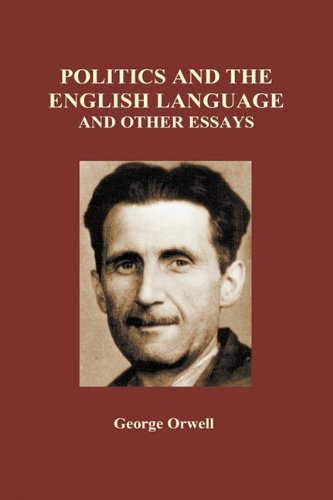
Burma, and in 1903, in Motihari, Burma (British India), Eric Blair was
born. Though his family brought him back
to England as a young child, where he was educated, around age 19 he returned
to Asia to serve in the Imperial Indian Police service in Burma. He served for some five years. One of his essays, “On Shooting an Elephant,”
describes the moment when he questioned imperialism. He did not want to shoot the animal, but
having attracted a crowd of perhaps 2,000 natives, all anticipating the
shooting, had he not used his rifle on the animal, the natives would have
laughed at him. He, and the service,
would have lost face. So the imperial
policeman, reluctantly, killed the elephant.
A little later Blair changed his name to George Orwell, fought with a
Trotskyist regiment against the Franco fascists in Spain, and learnt to
distrust the Communists in that fight. Had
Orwell not left Iberia when he did, he might have become a victim of the KGB
squads.
When
war broke out between Germany and Britain in September 1939, the Vice Roy of
India, without consulting India’s prominent political figures, declared war on Germany. Orwell, back in England, also quickly
surmised that it was essential that the democratic, Western powers defeat
Hitler’s led Axis (which had just concluded a non-aggression pact with Stalin’s
USSR). Suddenly, Communist Parties no
longer envisioned fascism as the great threat, but now the great danger was
imperialism. Therefore, the Communists
refused to aid the cause of the imperialist nations – Britain, France, Belgium,
the Netherlands, etc. Orwell, however,
concluded that not only should the UK fight against the Nazi menace, but
Canada, South Africa, Australia, and all the Empire’s dominions and colonies
should join the war against the threat to democracy posed by fascism. Though Orwell was born in Indian Burma, v.
Tunzelmann never mentions him in her book.
Mahatma
Gandhi is frequently, and rightly, mentioned in Indian Summer. The author
even reports Gandhi’s sage wisdom for the British as they entered the war: “He
advised the British to give up the fight against Hitler and Mussolini. ‘Let them take possession of your beautiful
island…allow yourselves, man, woman, and child, to be slaughtered, but you will
refuse to owe allegiance to them.’”(p. 110)
Gandhi also had advice for the Jews of Germany: they should engage in
passive resistance to the Nazi oppressors and “if necessary, give up their own
lives as a sacrifice.” Gandhi also urged
“the Jews to pray for Adolf Hitler” And
in May 1940 Gandhi added, “He [Hitler] is showing an ability that is amazing
and he seems to be gaining his victories without much bloodshed.” Finally Gandhi concluded that “the Germans of
the future ‘will honour Herr Hitler as a genius, a brave man, a matchless
organizer and much more.’”(111) It is
thus not too surprising to learn that an American envoy to India concluded that
Gandhi basically preferred the Japanese to the British.
As
popular as Gandhi was, he was not the only spokesman for the Indians. Jawaharlal Nehru, a prominent figure in the
Congress Party, was vehemently opposed to the Axis and fascism. He believed they should be fought. On 14 September 1940 the Congress Party,
which had won overwhelmingly the Indian elections of 1937, now demanded total
independence for India. They would fight
the Japanese, but only after granted independence. The Vice Roy Linlithgow rejected this,
countering with a possible dominion status for India in a vague future. In response, on 10 November 1940 Congress
leaders resigned their offices. Mohammad
Ali Jinnah, leader of the Muslim League, and determined not to live in an
Indian Hindustan, was delighted with those resignations; Jinnah called it “Deliverance Day.”
Meanwhile,
the war was going disastrously in Europe.
In May 1940 the British replaced Prime Minister Chamberlain with Winston
Churchill, a man who had opposed the appeasement policy and warned for years of
the danger of a more powerful Germany.
Churchill was also a firm believer in the British Empire and of India’s
place within it. He also believed in
divide and rule, and as he distrusted many of the pacifistically inclined
Hindus, he drew closer to the Muslim leader Jinnah. The Muslims were willing to fight to retain a
British presence in India.
But
the choice for India was broader than the non-violent, anti-war, pacifist
strain of Gandhi, broader than the Congress Party of Nehru’s demand for
immediate independence; broader than the appeal of Orwell to fight to preserve
Western democracy against fascist totalitarianism, and end colonialism
following an Allied victory in the war.
V.
Tunzelmann does mention Subhas Chandra Bose on a few pages, but fails to grant
him the recognition he deserves in the struggle for Indian independence. In 1937 the Congress Party won an
overwhelming majority in the Indian elections.
The Muslim League had received only 5% of the Muslim vote. Nehru was then spending much time in Europe,
and in 1938 the leadership of Congress went to the charismatic Mayor of
Calcutta, S, C, Bose. Gandhi disliked
him, but accepted him until Bose publicly announced he would set a date for
British withdrawal from India. If they
did not go, Bose declared violence would ensue.
Gandhi was appalled by this open rejection of his non-violent philosophy
and tactics, and Bpse was forced to resign the Congress leadership in May
1939. He remained Calcutta Mayor, but
when war was declared, the British held him under house arrest.
Sometimes,
simple organization of material may lead to distortion, and I think that can be
seen in Indian Summer. V. Tunzelmann writes that in 1942 with the
support of both Gandhi and Nehru, the Congress Party initiated a “Quit India”
campaign. “The slogan was not only
catchy but accurate: the British administration was to be harried, disobeyed
and besieged until it simply upped and left, war or no war…The Quit India
resolution, passed by Congress on 8 August 1942 … sanctioned ‘a mass struggle of nonviolence…’ This was a call for treason as far as the
British were concerned.”(127) The first
arrests occurred the very next day, 9 August 1942, and India exploded in
violent uprisings, “the most serious since that of 1857.” Gandhi, Nehru and other Congress leaders were
arrested for the duration.
Several
pages later, V. Tunzelmann writes: “The political vacuum created by Quit India,
not only benefitted the Muslim League but had allowed the Indian National Army
(INA), Bose’s militia to get a foothold.”(134)
Bose, ousted as head of the Congress in May 1939, had been under house
arrest with the advent of war. But with
the aid of the Abwehr (the German CIA), Bose escaped to Kabul, Afghanistan,
flew from there to Stalin’s Moscow (still friends with the German regime), and
thence to Berlin. In the German capital
Bose met Hitler, Mussolini, and high Japanese officials. He was allowed to broadcast on Radio Berlin’s
short wave to India to promote the cause of Indian independence and the Axis. Bose was also permitted to recruit among
Indian prisoners of war in Europe, and gained 3,000 to form the Free Indian Legion
within the Wehrmacht (the German army). They
began to call Bose “Netaji,” the Hindo equivalent of Duce or Fuehrer. In the spring of 1943 he left Hamburg on a
German U-boat, cruised round Africa to Madagascar where he changed to a
Japanese submarine, and in summer 1943 emerged in Singapore. He was soon recruiting from a much larger
pool of Indian pow’s for his INA. He
declared a provisional government of India, declared war on Britain and the
United States, and with Japanese help, planned to invade India. His government was recognized by a few
nations, including the Republic of Ireland.
The
way the authoress tells the story, the Congress’ Quit India campaign caused a vacuum of which
both the Muslim League’s Jinnah and the Axis ally Bose take advantage. But it can be interpreted differently – the
escape of Bose, and then his broadcasts to India from the Reich’s shortwave
radio put pressure on the Congress Party to do something. Indeed, one reason George Orwell was
broadcasting from London on BBC to India was to counter the pro-Axis broadcasts
from Berlin by Bose. Furthermore, the
Japanese attack on and occupation of Burma in March 1942 meant the war was no
longer just in Europe and Africa, - it was literally next door to India
(indeed, what a decade earlier had been part of India!).
It
is commonly assumed today that national liberation movements are parties of the
Left – and that is often the case.
However, other national liberation movements have aligned with the
Right. Bose and his Indian independence
movement was clearly allied with the Axis.
And he was not the only such leader to broadcast from Radio Berlin. Amin al-Husseini, the Grand Mufti of Jerusalem,
deemed by many as the founder of the Palestinian liberation movement, during
WWII, met with Hitler and Himmler, inspected concentration camps, and broadcast
to the Middle East from Radio Berlin.
Much of his message was simple – “Kill the Jews!” After Hitler’s armies conquered most of the
continent, suddenly Neuropa included a Slovakia, and a Croatia. Many people from those lands may have taken
pride in the new maps. Early in the war,
there was a coup in Iraq that favored the Axis.
It was short-lived, put down by the British, but it showed pro-Axis
support in unexpected places. When
Germany’s Gen. Rommel prepared to attack Egypt from Libya, many in Egypt’s
Muslim Brotherhood eagerly awaited to greet the Germans as liberators. Decades before, in the Spanish-American War
in the Philippines, many were elated when the Spanish were defeated, but they
preferred independence to becoming an American colony. The leader of the insurgent pro-independent guerrillas
was Emilio Aguinaldo. The Americans used
an early version of water-boarding to defeat the native bands. When the Japanese took the Philippines from
Gen. McArthur soon after Pearl Harbor, Aguinaldo reappeared to lend his support
for the Japanese, speaking and broadcasting on behalf of the new regime. And during and shortly after WWII, one Puerto
Rican independence movement favored the fascism of Spain over the dominion of
the US. Some of its activists attempted
to assassinate Pres. Harry Truman, and others shot up the US Congress. National liberation movements are NOT the
monopoly of the Left.
From
1886 until 1937 Burma was part of British India. It was partitioned out in 1937, apparently
without the mass murders and atrocities that accompanied partition in 1947
between Muslim India and Hindu India – Pakistan and India. Why?
Why was one partition so peaceful; the other so bloody? V. Tunzelmann does not mention that Burma was
Indian or that it was partitioned.
Ignoring the question is not the same as answering the question.
Many
of us know about the German blitzkrieg of WWII.
Much of Poland fell to the Germans in weeks during the autumn of
1939. In April 1940 Denmark was
conquered in one day, and Norway also in the month of April. In May 1940 the Netherlands and Belgium fell
to the Germans. In June 1940 France was
invaded, and on 22 June the new head of state, Marshall Petain, signed the
armistice with the Germans, ending the war.
Zoom, zoom, zoom, one nation after another fell to the Germans. We are apt to forget that the Japanese
accomplished something quite similar.
December 7, 1941 the Japanese attacked the American fleet in Pearl
Harbor, Hawaii. But almost
simultaneously, they attacked Hong Kong, and the American colony of the Philippines. The war with China, conducted with gruesome
brutality, had spread from Beijing in 1937 to the south and much of coastal
China was occupied by the Japanese.
There had been an undeclared war near the border of Manchukuo and
Siberia, but to both Japan and the Soviets, it was costly, indecisive, and both
sides wanted to get on with other projects.
Only after Japan and the USSR signed a 5-year friendship pact, was
Stalin willing to shift his troops from the East to partake in the partition of
Poland that he had agreed to with the Nazis.
In 1940 Japan got the right to enter Indochina, as it was a French
colony, and Marshall Petain sought good relations with the Axis. But just after Pearl Harbor, the Japanese
also attacked the Dutch colony of Indonesia, the British of Malaya, and the
British of Burma. To get to Burma, the
Japanese invaded Siam, but in hours, The Thai leaders agreed to Japanese
demands for transit through their country and other concessions. Soon Siam would join the Axis and declare war
on Britain and the US. Siam would be
paid for its help to the Axis in the war by gaining slivers of territory from Indochina,
Malaya, and Burma. In 1937 when the
British separated Burma from India, a new Burmese Prime Minister took office,
Ba Maw. But as war clouds hovered, Maw
spoke out against Burma’s entry into the conflict. He lost his office and the British imprisoned
him. After the Japanese conquered Burma
by March 1942, they decided to install a regular government. It was headed by Ba Maw, the earlier Prime
Minister. The Japanese decided not to
invade India at that time but rather consolidate and digest its massive conquests.
There
was one safe place for the British,” the Gibraltar of the East,” the unconquerable
Singapore. Its huge cannon were cemented
facing the sea. The Japanese did not
play fair; they invaded Malaya by land in a pincer movement – some invading
from Indochina, some transiting through Thailand. Eventually these troups on the peninsula would
attack Singapore from the rear. The
British surrendered “without firing a shot.”(124) V. Tunzelmann is surprised, for she sees this
as a replay of Laurence of Arabia Aqaba in WWI.
But surely a more contemporary analogy would have been appropriate - the
French Maginot Line, where the huge guns were cemented in place facing Germany,
but the Germans outflanked the Allies, coming round and then behind, and the
huge guns proved useless. France
surrendered. And Singapore surrendered
in 1942. V T states 60,000 Indian troops
were taken prisoner (124); wiki says a total of 170,000 surrendered – the
largest number surrendered in the history of the British military. (Another Wikipedia version states the cannon
were not cemented and could and did swivel round, but the ammunition on hand
was meant to penetrate through heavily plated ships; they were not high
explosive missiles. So even when the
guns were turned against the invading Japanese, the ammunition fired had little
effect upon the advancing infantry. But
shots were fired and many battles fought in Malaya before the assault on
Singapore its capitulation was a
shocking loss to Churchill.)
In
a few months, from December 1941 to March 1942, Japan demonstrated that the
colonial powers could not defend their colonies. In a few months Japan outblitzed the Germans,
seizing more countries with larger land mass and with many more millions of people
than had their European ally. From
December 1942 through March 1942 Japan conquered the Philippines, Hong Kong,
Indonesia, (they already had part of Indochina), Malaya, Singapore, (transit
rights through Siam), and Burma. Burma
had been part of India. Would the Axis also
take the 400,000.000 people of India into the East Asia Co-Prosperity Sphere? (Both the population of China and of India at
the time were 400 million, but both were guestimates.)
From
his base in Japanese occupied Rangoon and on one of the nearby islands, Bose
prepared for the “liberation” of India from the British. The Japanese hoped to invade India, cutting
off growing links between India and Chiang Kai-shek’s Nationalists. Meanwhile, the British were building supplies
and men for an invasion of Burma, centering their accumulating forces in the
Indian regional capital of Imphal. That
is where the Japanese decided to attack with their own forces, which would be
bolstered with Bose’s Indian National Army as well. The battles erupted in March 1944 and
continued until 3 July, when the monsoons began, and the Japanese-INA siege of
Imphal collapsed. It was the largest
Japanese military failure till that date, and effectively ended fears of a
successful invasion of India. Some on
google deem it one of Britain’s greatest battles.
In
the 1980s television series, “The Jewel in the Crown,” one aspect of the INA
threat is stressed that goes unmentioned in Indian Summer – the men who had sworn
fealty to the British crown and who had served as loyal soldiers and comrades,
were now fighting against their British officers. The psychological effects of this “betrayal”
are exposed in the fictional account, but ignored by v. Tunzelmann. Also in the fiction, what happens if Imphal
falls? What happens if India is invaded
by Indians? Will India remain with the
British, or swing to Bose, the INA, and the Axis? This possibility barely gets a ripple in Indian Summer.
The
horrors of partition are gruesomely depicted in the 1998 film by Deepa Mehta,
“Earth 1947.” Admittedly, v. Tz’s
paragraphs describing a riot here, a riot there, and another bloody massacre
there, lacks the emotional impact of a film.
But what happened in India during WWII to so exacerbate hatreds that
when partition occurs, it culminates in an avalanche of atrocities. The book fails to explain how this could and
did happen.
In
the midst of these struggles, v. T. spends most of her book on the lives of the
last ViceRoy of India, Lord Mountbatten, and his wife Edwina. The author includes much biographical
material on Gandhi, Nehru, and Jinnah and other prominent figures of the
era. And each of the characters featured
does share one virtue in common – they all displayed amazing courage.
Much
of the book spotlights the Mountbattens.
He resented that his name had to be changed during WWI from Battenberg,
but he remained a minor aristocrat and distant relative of the royals. In the 1920s and 30s, he was a close friend
of the Prince of Wales, who would rise to the throne as Edward VIII. In the 1920s Louis Mountbatten married a
young woman who had spent most of her early years far from luxury. Her mother died when she was quite young, and
she did not get on with her step mother, who arranged for her to attend
boarding school, and then a “finishing” school where she had to scrub rooms,
sew, and perform other chores so she could direct her maids at some later
date. She recalled those years as
hellish, devoid of cosmetics and grace.
But coming of age, Edwina Ashley was to inherit a fortune, and was
determined to have a good time. Though v
T does not use the term “flapper,” Edwina was set for fun, as was her naval man
beau, Louis. They married, and toured
the world. In Hollywood they even
appeared in a Charlie Chaplin film. They
knew Noel Coward, and he wrote a play using them as the models for his
characters. The Mountbattens were a
modern couple, and there were rumors that both had liaisons on the side. They holidayed with the Prince of Wales and Mrs.
Wallis Simpson. But when Edward
abdicated, Louis decided to retain friendships with his cousin, George the new
king, and basically cutting off with Edward, the old. In time, Louis would seek to promote a
romance between one of his poor, Greek, aristocratic nephews and the young
Princess Elizabeth. Eventually they did
marry. During WWII, Louis was a naval
officer, and muddled through. After the
war, he was named ViceRoy of India and his mission was to get the British out,
quickly, and with as little trouble as possible.
He
and Edwina met Gandhi, Nehru, Jinnah, and other political and princely
leaders. India still contained many
princely states, where sometimes the prince was Hindu, and the majority of his
people Muslim; sometimes the reverse.
Gandhi did not want to divide India on religious lines. Jinnah did, fearing the Muslims, 25% of the
population, would be swamped in Hindustan.
The 1937 elections had gone all to the Congress Party. But by the end of the war, Jinnah’s Muslim
League had gained 75% of the Muslim vote.
Churchill, voted out of office in 1945, encouraged Jinnah to push for partition. Labour Prime Minister Atlee just wanted
Britain out. V. T. includes photographs
to emphasize her point that the Vice Reine, Edwina was having an affair with
Nehru. In time, Jinnah suspected that
the Mountbattens were stacking the deck in favor of Nehru’s party, and against
the Muslims. Edwina was doing more,
too. She visited hospitals, making lists
of needed supplies, and then using her influence, got those supplies to the
medical institutions. She seemed to relish
the social-work side of her mission – though she did not have to do any of it.
The
second time of crunch was the time of partition and independence. Suddenly, in various parts of India, people
who had resided together in relative peace for generations were now set on killing
each other. In one area Hindu mobs set
upon a Muslim minority; in another area the reverse. Many had to flee their homes, their towns,
their provinces. About a million people
were killed. Edwina would go to camps
where Muslims had gathered in fear, and she would speak to Hindus preparing to
attack the camp, trying to dissuade them, and displaying great courage. She did this more than once, risking her life
to prevent a slaughter. Nehru would do
the same, even brawling with some of the most vociferous rioters. When Gandhi, so disturbed by Hindu attacks on
Muslims in Calcutta, stayed at the home of a Muslim, and began a fast to stop
the anti-Muslim activities in Calcutta, a mob of Hindus came to the home where
Gandhi was staying and shouted, “Die, Gandhi!.”
Nehru was so upset, he went to the angry crowd and tried to shame them
for disrespecting Gandhi. But, in
Calcutta, in great part due to Gandhi’s spiritual efforts, the anti-Muslim
riots did stop.
With
murders all around and law and order crumbling, Jinnah was set to ride in a motorcade
in Karachi on Pakistan’s Independence Day in August 1947. Louis Mountbatten, Vice Roy until that day,
was scheduled to accompany Jinnah in the open car. There had been many threats of assassination
against Jinnah, and this would be the perfect opportunity. Mountbatten was afraid, but he had his
duty. He and Jinnah rode together; they
both survived. Jinnah then gave a speech
in which he hoped the new Pakistan would be the home not only of Muslims, but
Hindus, Sikhs, Parsis, and all religious people. Jinnah had himself married a Parsi, and spent
that Christmas with a Christian family.
Jinnah was not an extremist Muslim, but he had roused the Muslim
communities of India, and some of them would be far less tolerant. Jinnah was old and ill; he died in September
1948, a year after his Pakistan was born.
Gandhi,
the Hindu semi-religious leader, aroused anger among Hindus who believed that
he was too sympathetic and forgiving to the Muslims. In January1948 Gandhi was assassinated by a
Hindu.
After
the Mountbatten’s had fulfilled their duty in India, Edwina usually returned for
an annual visit, which invariably included visits to Nehru. Louis was aware of the affair, as were their
daughters, but there was no publicity about it.
V T observed: “The security of three nations rested on this love affair
being kept secret.”(336) Perhaps. In February 1960 Edwina died. Nehru passed in
May of 1964. V T alleges that Louis
toyed with the idea of leading a coup against the British government. But it
was another group seeking to destroy the established order in Northern Ireland
that would change Louis’s fate. In 1979 the Provisional wing of the Irish
Republican Army set off a bomb killing Louis Mountbatten.
Louis
Mountbatten, as the last ViceRoy of India, was clearly important in establishing
how he would fulfill his mission of evacuating the subcontinent and public
relations, image, and impression are part of that job. But is it necessary for the author to inform
us how many and which medals he wore on his uniform for this function and
that? Do we have to have a description
of Edwina’s gowns for this ball and that reception? She was one of the richest women in the world,
and could afford the best. But one
wishes that the book contained a little less on glamour and more on why there
was a disaster.
In
the era of feminism and multiculturalism, I must ask a question – Is the “secret
history” von Tunzelmann mentions in her subtitle a reference to the affair
between Edwina Mountbatten and Jawaharlal Nehru? I doubt if that love story changed the course
of the history of the Indian subcontinent.
There are affairs that did change history – Cleopatra with Caesar and
then with Mark Anthony; Henry VIII and his many wives. But I do not think that the the Nehru-Edwina
affair changed history in a significant way.
Their story may be interesting,
gossipy, fun, and appeal to traditional female readers, but was it that
important? Far more important were the
growing hatreds between communities exploding during and after the war. When perhaps thousands of women had their
breasts cut off, and tens of thousands raped, and boys slaughtered, and men
killed as in war, I think those incidents more important than an elite love
affair.
Finally,
I wrote that Indians faced a rational choice at the time of crunch during
WWII. We know that in some cases people
vote with their feet, but it is noteworthy to count how the Indians voted with
their arms. While a mere 40,000 fought
for the Axis supplied Indian National Army of Subhas Bose, 2,500,000 fought on
behalf of the British Empire. Of course,
some of those changed sides after becoming pows, but the numbers are still very
much in favor of the British. But to put
things in a larger perspective, many more millions did not fight at all. If there were 400 million Indians, 40
thousand is a very small number, and even 2.5 million is still a very small
number. By contrast, how many partook in
the harassment of the Quit India campaign?
Nevertheless, in India today many celebrate both Gandhi and Bose as
leaders of Indian independence. I think
Bose deserves to share that acclaim.